

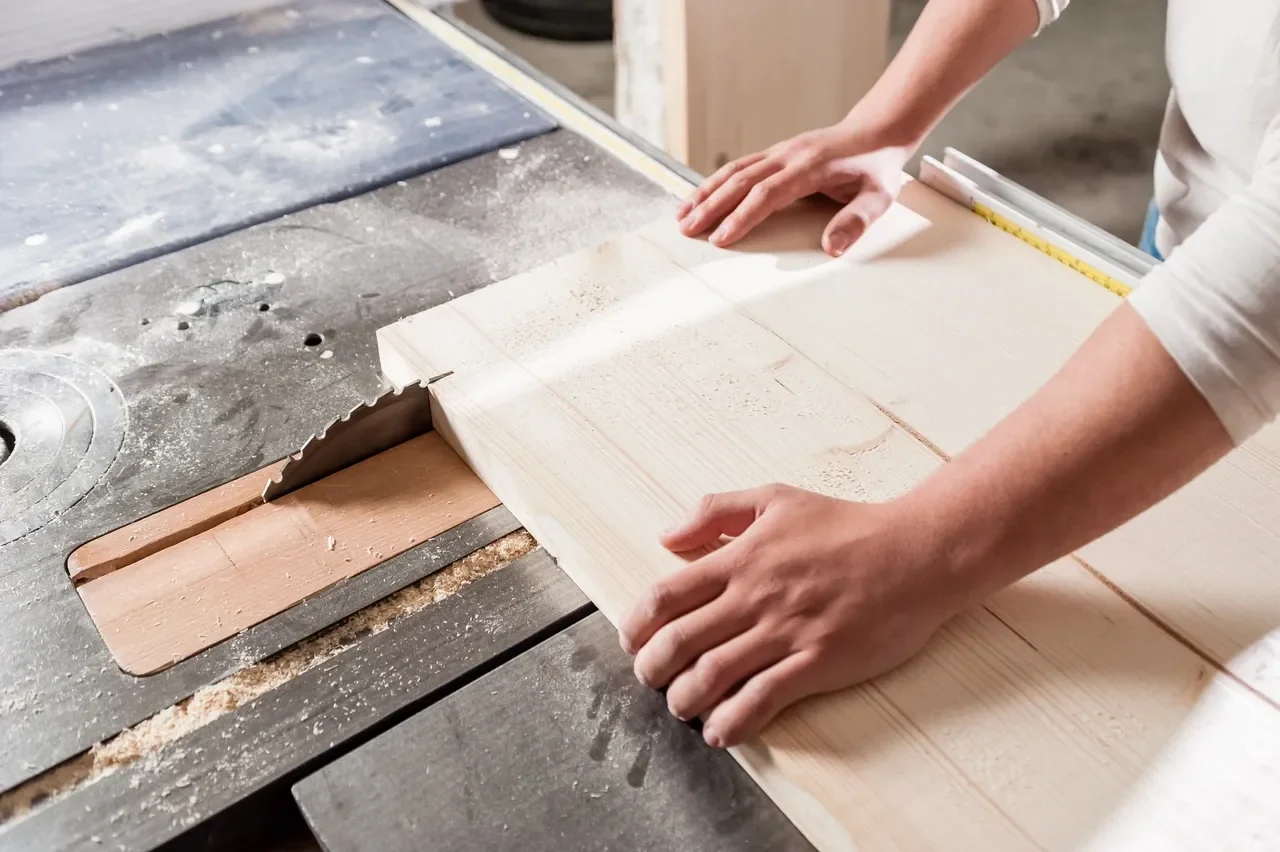
No matter what kind of work you do, I'm sure there are certain tasks that are completed differently depending on the person completing the task. Woodworking is no different. Every tool serves its purpose, but there are certain tools that can perform multiple tasks. And that's why the TABLE SAW is my favorite tool in the shop.
There are many saws available for use: circular, scroll, jig, hand, hack, band, miter, track, and table. I'm sure I missed some. They are all useful in their own right, but sometimes you don't have the space or the money for all of them. That is why it is important to choose one that's more versatile or that would be used the most based on the projects you plan to make.
When I first started really getting into the craft, if a project called for a table saw, I would immediately skip it. I had a table saw, but it was too scary to use. So it was always a hard pass for me unless the cut needed was very basic. The blade was exposed and I've heard too many horror stories about people losing fingers (sometimes limbs).
THE BASICS
What is a table saw you ask? It is exactly how it sounds. It is a saw that sits inside of a table. There are technically two types: stationary and portable.
A stationary saw sits in a type of cabinet. They are large and are great for those who have a spacious workshop. They are very powerful and have a large cutting capacity.
Portable table saws, also called jobsite saws, are smaller and are meant for individuals that complete their work onsite. But they are also good for makers that do not have a large enough footprint in their workshop. They fold up and are usually on wheels to make transport easier.
A standard table saw has a blade diameter of 10 inches. Some are smaller at 8 inches. The saws come with a fence to help guide your work piece to ensure you will have a clean, straight cut. When you first get a saw, you should always check to make sure the blade and fence are square... otherwise you'll end up with bad cuts or pieces that don't properly fit together.
If you are in the market for a table saw, there are several comparison videos that would be useful in helping you decide which one would best fit your needs.
SAFETY FIRST
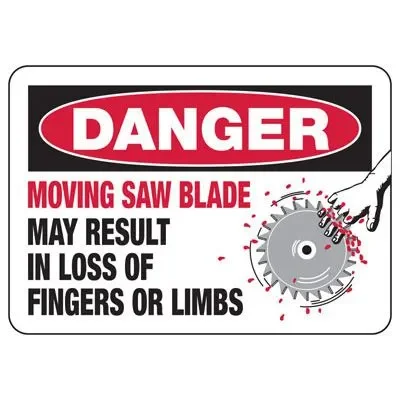
As I mentioned earlier, I was super nervous when I had to use the table saw. It sounded so loud and just seeing the blade turning at warp speed made me hot under the collar. 😰 One thing I realize now is that I felt uncomfortable because I did not have the blade guard on the saw. I bought the saw second-hand and although the blade guard was included with the purchase, it was difficult to put on and I was certain I did not have it connected correctly...no matter how many times I read the instructions. So, I left it off, and limited my use of the table saw. Granted there are some cuts you will make that require the removal of the blade guard. For those cuts, make sure you have the appropriate safety tools. It could be the thing that saves a finger...or hand.
So one thing I definitely recommend, is to invest in safety accessories. That includes push sticks and blocks which help keep your hands on the workpiece and as far away from the blade as possible. Once I started using push sticks and Micro Jig's GRR-Ripper, I definitely gained some confidence in being able to handle a workpiece and make proper cuts.
As I was considering upgrading my scary hand-me-down, I watched a few YouTube videos to help me narrow my decision. It came down to the Dewalt and the SawStop. I decided to go with the SawStop for one main reason...safety. This is the only table saw that is engineered to detect human skin contact with the blade and immediately stops the saw. It is definitely much more expensive than other saws, but when I considered the safety feature and the ability to keep my fingers and end up with maybe a small cut instead, it was a no-brainer. However, if the price gives you pause, make sure to invest in some quality safety accessories.
There is a ton of information on the internet on how to properly operate a table saw and what are the best safety accessories. Even if you have used one in the past, it is always a good idea to revisit safety tips every so often.
VERSATILITY
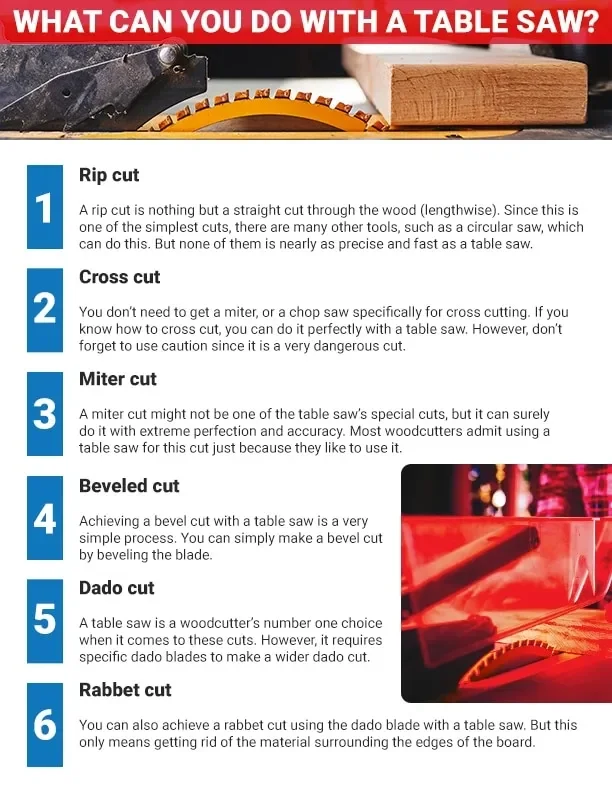
A table saw can be used to make many types of cuts. Its main function is to make a rip cut (cutting the long way on a board). Make an adjustment to the saw blade angle and it can make miter cuts. But with a jig or accessory, it can make cross cuts (just like it sounds... cutting across the short side of a board). It can also make dadoes and rabbets in your project. And if you're really skilled, you can even cut a cove edge trim with the table saw. If you did not have a table saw, doing all those mentioned cuts would require a couple of different tools.
There are times when a table saw may not be the best option, especially if you have large sheet goods that need to be cut. That's when something a bit more portable, like a circular saw or track saw, would come in handy. Unless, of course, you have a large cabinet table saw with a decent sized table space. Reason being is that you need to make sure you have the space and support for the cut on all sides. If a work piece is not properly supported, it can end in disaster and you can mess up your workpiece.
CONCLUSION
There are many things to consider when beginning a woodworking journey. One of those major considerations is what tools you will buy for your shop. That decision may determine what you build. Either way, make sure you take the time to properly learn how to operate your tools and that you have the appropriate safety accessories. After I learned how to properly and safely use my table saw, it opened up a wide variety of ways to make items and I learned the versatility of the tool. The more you know, the more you grow!!!
Thanks for reading. Have a dynamite day!
