In a previous blog post, I discussed my favorite tool in the shop, the table saw. Part of that discussion mentioned some safety tips. Today, I'm going to discuss safety in more detail. Whether you are a seasoned maker or just starting out, you still need to take safety precautions when in the workshop. Making sure to be safe in the shop can not only prevent a serious injury, it could save your life.
The essentials
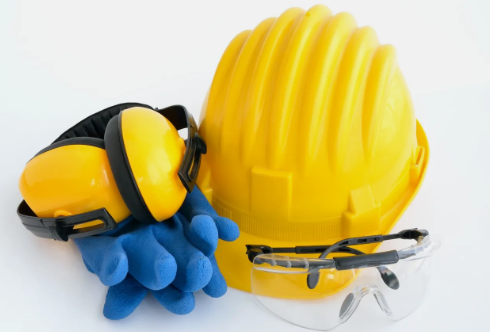
Let's start with some basic, but very important safety tips.
#1 - Mask/respiratory protection: No matter how good your tool claims to remove dust, particles will still be in the air. The more harmful particles are those super small ones that you probably don't see. Additionally, many stains and finishing products contain toxic chemicals that can cause cancer when inhaled. So it is imperative to wear proper respiratory protection. These can range from disposable masks, reusable soft masks (like the RZ Mask M3; highly recommend), half-face respirator masks, and even full-face respirator masks. It really depends on the task you are performing and what feels most comfortable. The potential impact of not wearing a mask will not be immediate. It is the future side effects, like cancer, that you have to worry about. So always take precautions and wear a mask.
#2 - Eye protection: When working with wood, pieces can go flying and they will somehow find a way right into your eye. There are many options out there varying in price, style, and coverage. So do your research to find what works best for you. No matter what you decide, just make sure to wear them. Because you cannot work if you cannot see.
#3 - Appropriate clothing: Believe it or not, there is a "dress code" when it comes to woodworking. You can be as stylish or cute as you want to be, but you need to be mindful of loose-fitting clothing or clothing that can be constricting. You want to make sure your clothes do not get caught on a blade or bit, your equipment or even on the workpiece causing it to change direction. Additionally, you do not want clothes that are so tight that you cannot move, because there may be an instance where you need to act fast to catch something and you do not want to be hindered by your clothes. Some people even recommend wearing steel-toed boots to protect your feet from items dropping.
#4 - Ear protection: This was something I actually implemented later in my maker journey. I'm horrible, I know. I just really did not think anything of it. However, in woodworking, you are dealing with many loud tools. Some of which you run for an extended period of time. Over time, having these loud decibels constantly ringing in your ear can cause temporary hearing loss, sometimes immediate hearing loss, and other long-term hearing problems. As with everything else, there are many options to consider. It can be something as simple as ear plugs, noise-cancelling headphones, and even earmuffs specifically made for woodworking. The options are endless, and the prices will vary.
Tools that can help
There are many tools available that aid in being safe in the workshop. This is not a complete list. These are just the ones that I think are the most popular and what I use most often.
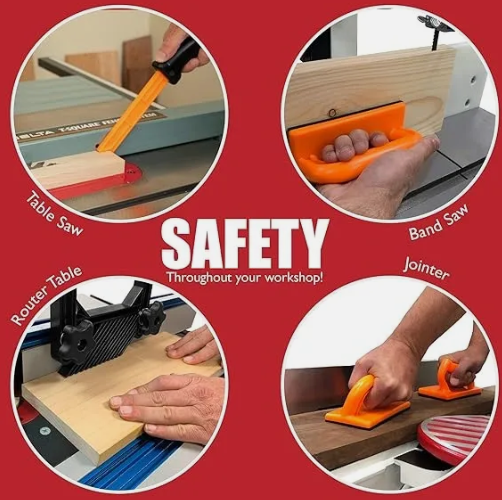
Push sticks/blocks
Just as the name implies, these are tools used to push wood through the blade on the table saw, band saw, and sometimes even a jointer/ planer. These are important because they help to keep your hands away from the blade. Like anything else, there are multiple options that range in price. There are several brands that offer a basic starter kit that will give you the necessary tools for basic builds. You just always want to make sure you are applying appropriate pressure on top of the wood to keep it from creeping up and against the fence to make sure you are staying straight. A great push block is the Microjig Grr-Ripper 3D Pushblock because it applies side pressure and top pressure in just one item. It's easy to set up and use, but it's pretty pricey compared to the starter kits. But a good investment nonetheless.
Featherboards
These are used to keep a board flat and against the fence and are great for the table saw, especially when cutting thin pieces. They are also used on band saws and are very helpful for router tables. The prices for these don't vary too much, so I would suggest getting the better quality from reputable brands. They tend to work better and are easier to set up, IMHO.
Positioning and Support
Body Position
You always want to think about where you stand in relation to the workpiece and the equipment. This is important in the instance where you get kickback. This is when the wood cannot proceed through the blade or bit, and will kick back or shoot back into the direction where you are feeding it. And you definitely don't want to be in the way when that happens. Remember that piece of wood is going through a blade that is rotating or oscillating at a high speed. So it will kick back at a very high rate. And if you're behind a table saw when that happens, you could injure a rib or worse.
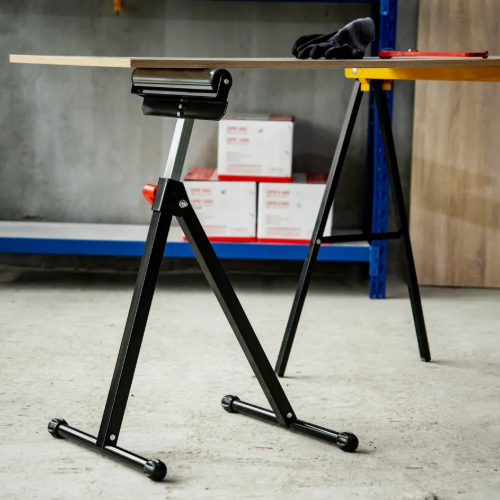
Proper support
Before starting a cut, make sure you've practiced the cut so you have an idea of where the piece will go, if you have enough support from start to finish of the cut, and where the cutoff piece will go. If dealing with a long piece, you may have to get support stands or even use sawhorses to help.
I know, that's a lot of information to process, but it's worth the time to invest in your safety.
Go make something dynamite!